
Last updated November 3, 2026
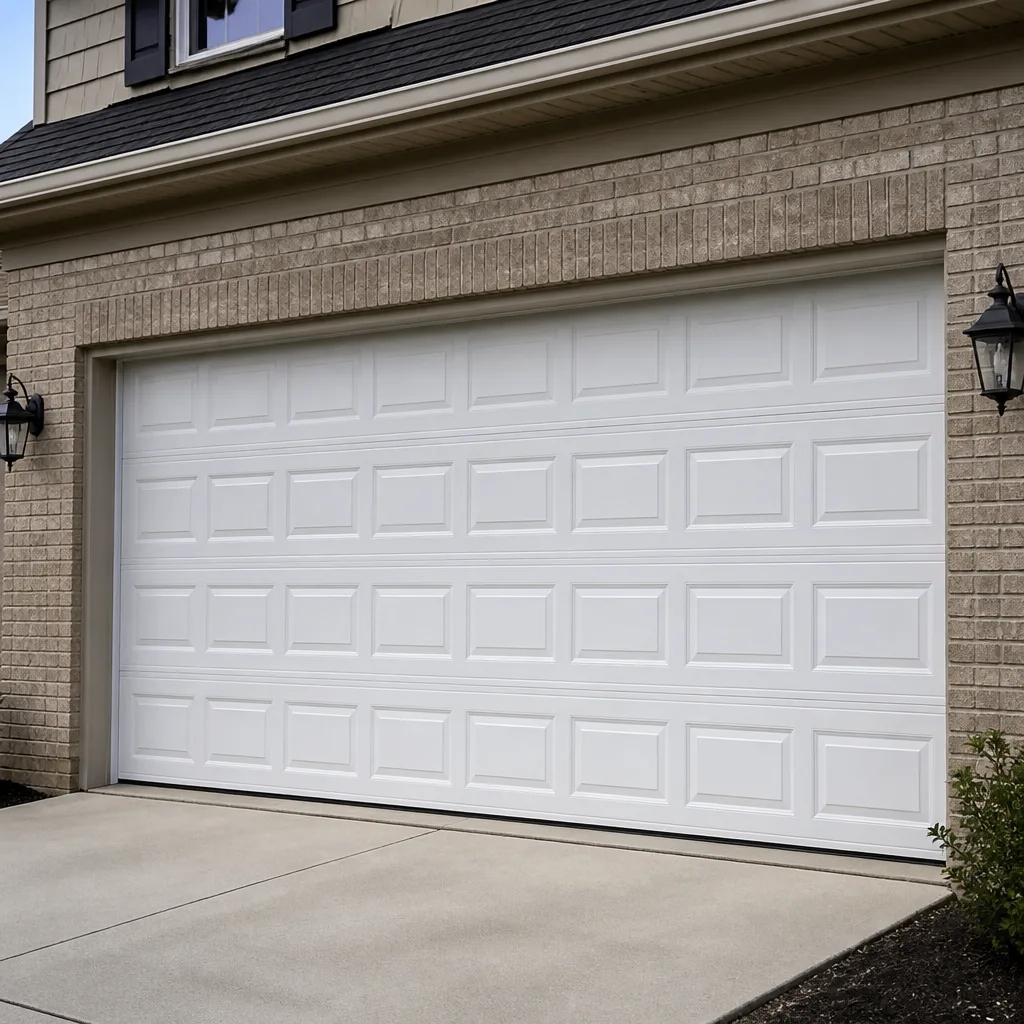 Raised-panel steel
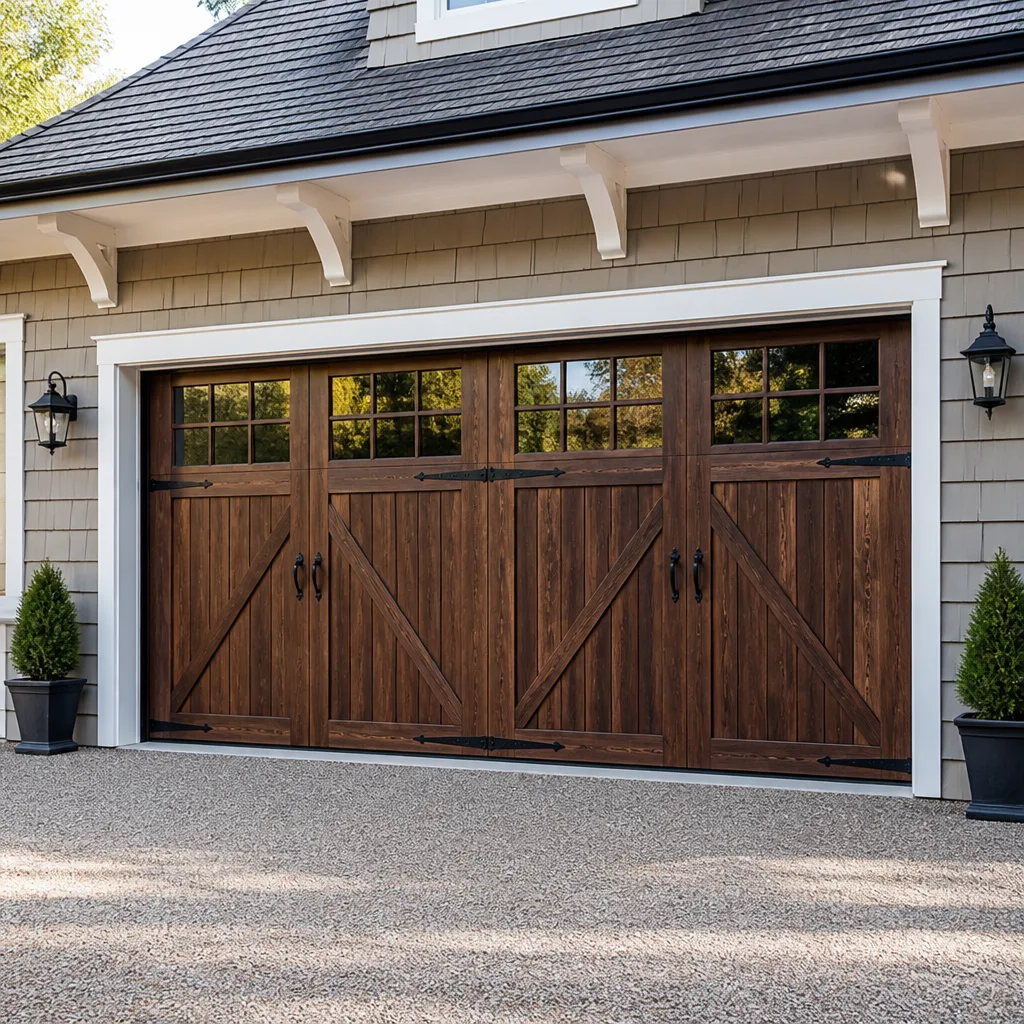 Carriage house
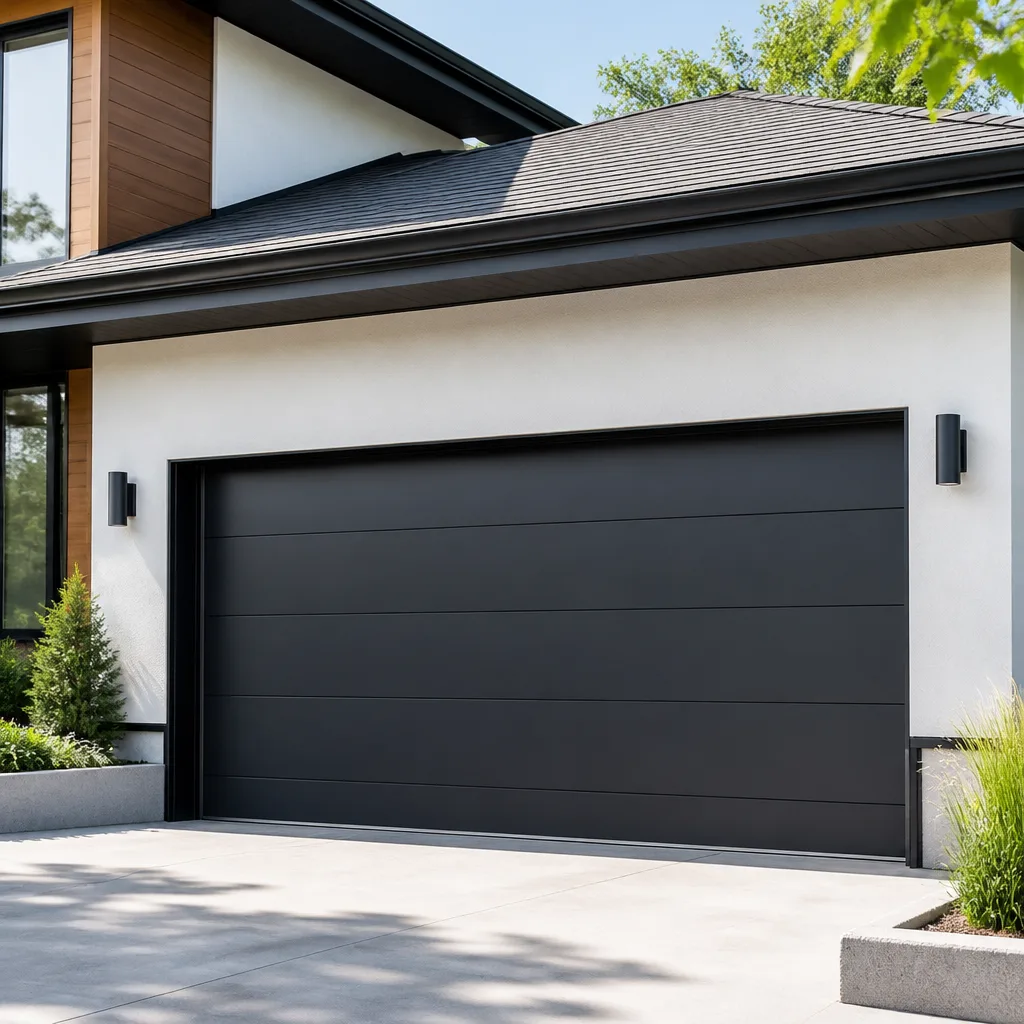 Modern flush
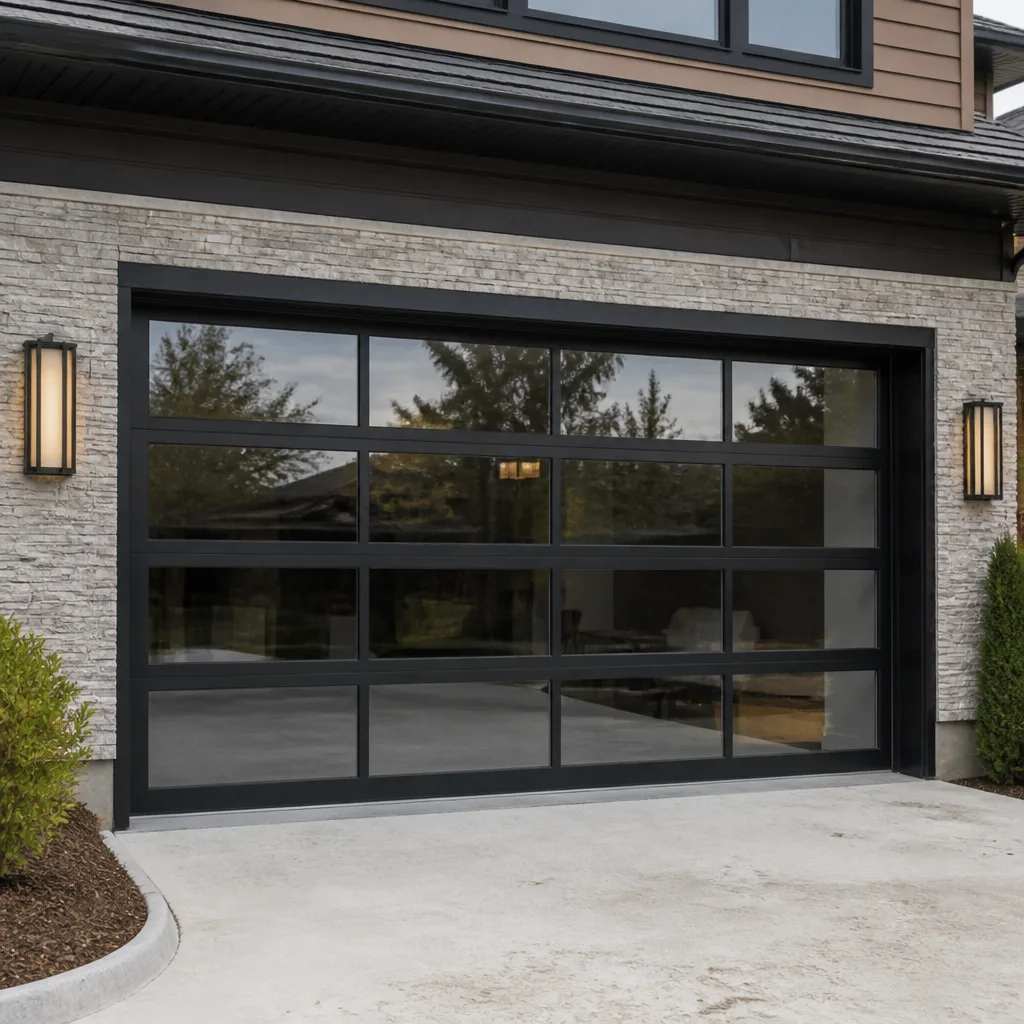 Full-view glass
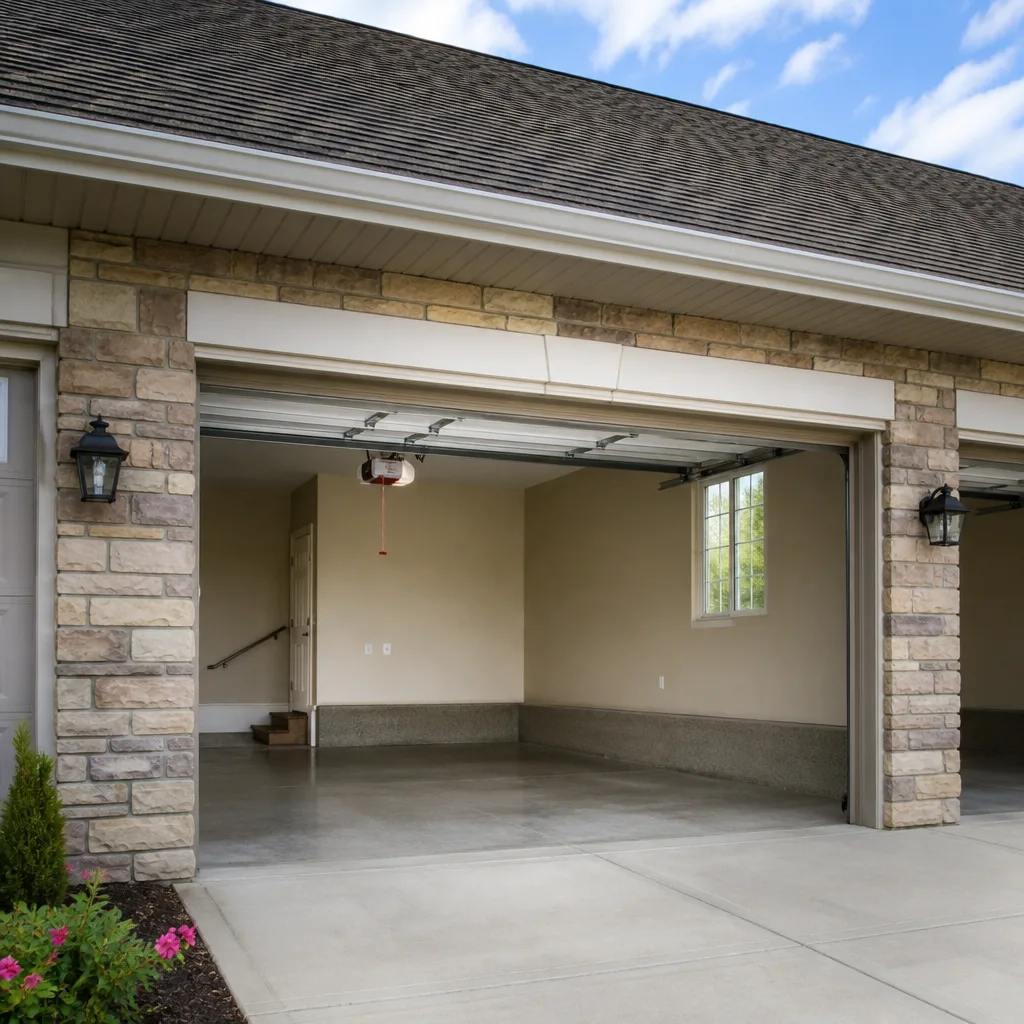 LiftMaster openers
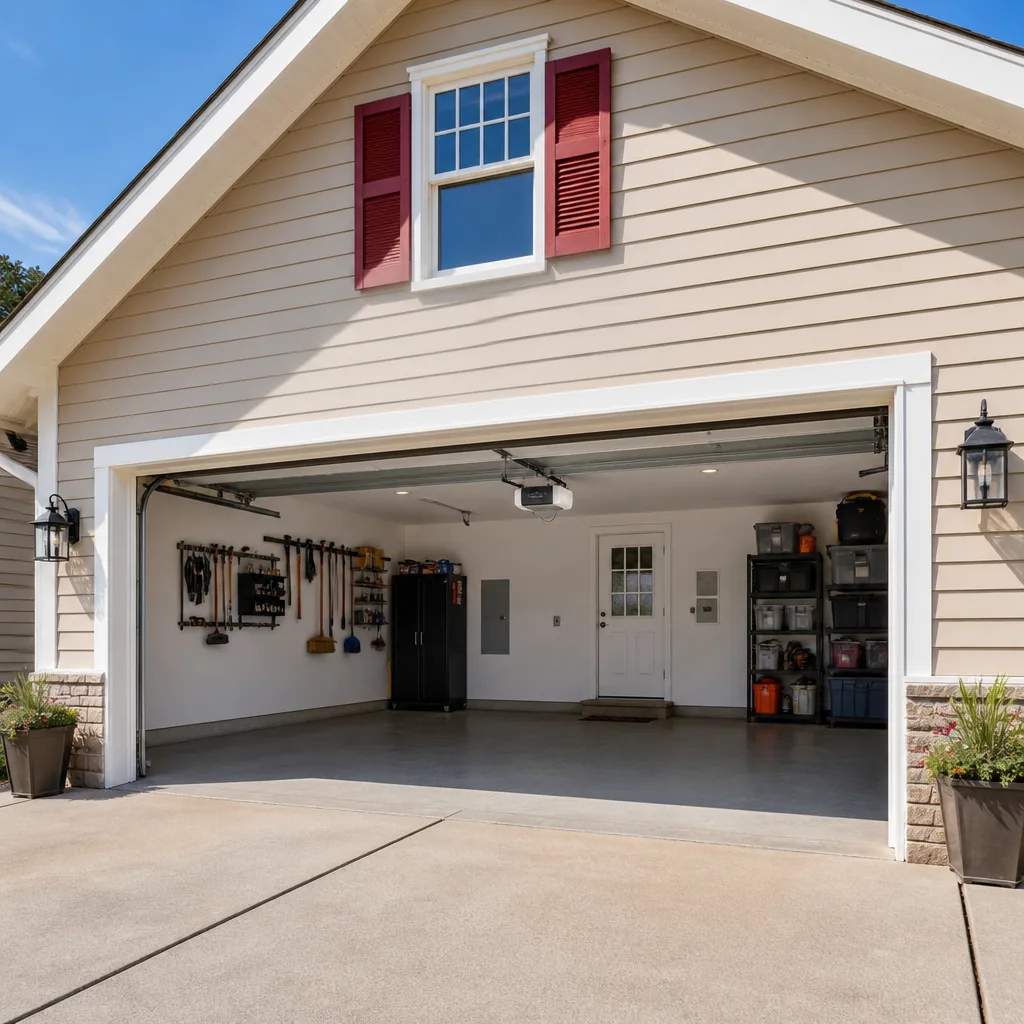 Chamberlain openers
Full 25-point door and opener safety check with every visit - springs, cables, rollers, tracks, and your LiftMaster or Chamberlain opener included
You get a price before we start. It does not change when the truck arrives.
Get your free estimateSeasonal Garage Door Care for Camarillo: Year-Round Homeowner’s Guide
Camarillo averages only 14 inches of rain per year, which is why most homeowners here assume weather-related garage door care is something people in Oregon or Florida worry about. That assumption is quietly expensive. The real culprit in this market isn’t water, it’s wind. Dry Santa Ana events pushing through the Conejo Grade, months of coastal marine layer humidity, and summer heat radiating off stucco and asphalt each stress a garage door system in ways a four-season maintenance checklist never addresses. This guide covers the Camarillo-specific seasonal calendar our technicians follow, what breaks and when, and the small preventive tasks that keep a door running quietly year-round.
Styles & brands we work with
- Raised-panel steel
- Carriage house
- Modern flush
- Full-view glass
- LiftMaster openers
- Chamberlain openers
Quick Answer
Seasonal garage door care in Camarillo means adjusting your maintenance calendar to four distinct local weather periods: the June-August marine layer (humidity and seal compression), September-November Santa Ana season (wind load and debris), December-February cool mornings (lubricant viscosity), and March-May post-rain inspection (rust and track settlement). The single most valuable task is a post-Santa Ana hardware inspection in late fall, which catches loosened fasteners before they become panel or track failures.
Table of Contents
- Why Camarillo’s Climate Breaks the Standard Maintenance Calendar
- June-August: The Marine Layer’s Effect on Wood Doors and Seals
- September-November: Santa Ana Wind Season and Hardware Stress
- December-February: Cool Morning Lubricant and Opener Adjustments
- March-May: Post-Rain Inspection Priorities
- The One Task Most Homeowners Skip: Post-Santa Ana Hardware Inspection
- A Month-by-Month Camarillo Maintenance Calendar
- Common Mistakes to Avoid
- When to Call a Professional
- Frequently Asked Questions
- The Bottom Line
Why Camarillo’s Climate Breaks the Standard Maintenance Calendar
Most garage door maintenance guides assume a four-season model: freeze-thaw cycles in winter, humidity in summer, rain in spring. Camarillo doesn’t follow that script. We’re in a Mediterranean climate with wet winters and dry summers, but the daily reality is more specific than that label suggests. June brings the marine layer, a low cloud deck that sits over Camarillo until mid-morning and keeps the air damp for hours at a time. By August, that moisture burns off early and temperatures climb, drying everything out. Then comes September, when the Santa Ana winds start. Each of these shifts changes how your garage door hardware behaves. A door that works perfectly in July can bind in August, rattle in October, and grind in January.
We’ve learned to think of Camarillo’s year in four operational seasons, not calendar ones. The marine layer period runs June through August. Santa Ana season runs September through November, with occasional events through winter. The cool season, such as it is in coastal Ventura County, runs December through February with overnight lows occasionally dipping into the high 30s near the foothills. Then March through May is the transition period after whatever rain we received, when ground settling and corrosion are most visible. Each season has a distinct failure mode. Our Garage Door Repair in Camarillo service calls follow this pattern closely.
Understanding which season you’re in matters because the corrective action differs. A squeaking door in June with humid air needs different attention than a squeaking door in October when the air is bone dry and the dust is blowing. The same symptom, different root cause. The sections below break down each period, what to check, and what to adjust.
Key Takeaways
- Camarillo’s maintenance calendar is driven by wind and humidity, not rain.
- Each season produces a distinct failure mode: seal compression in summer, fastener loosening in fall, lubricant stiffening in winter, and rust or settlement in spring.
- A five-minute seasonal inspection catches most issues before they require a service call.
- The post-Santa Ana check is the highest-value task on the calendar.
June-August: The Marine Layer’s Effect on Wood Doors and Seals
The June marine layer over Camarillo isn’t a dramatic weather event, but it’s persistent. For two to three months, overnight humidity stays elevated, often above 85% relative humidity until mid-morning. If you have a wood garage door, especially an older Clopay or Wayne Dalton model, that’s a problem. Wood absorbs moisture from the air and swells. The door panels expand slightly, the edges press tighter against the door frame and against each other, and the door becomes progressively harder to open as the season wears on. A wood door that moved freely in May can be binding by late July.
The seal situation is different but related. Rubber and vinyl bottom seals, along with the weatherstripping along the door frame, soften in sustained humidity. When they soften, they compress more under the door’s weight, and that compression becomes permanent. We’ve seen Camarillo homeowners in neighborhoods like Mission Oaks and Spanish Hills discover flattened bottom seals in August that were replaced the previous spring. The seal didn’t fail mechanically, it compressed under humid conditions and never recovered.
Here’s what to do during the marine layer months:
- Check the door’s balance monthly. Pull the manual release cord (with the door closed) and lift the door by hand. It should rise smoothly and stay open about three to four feet off the ground. If it requires noticeably more effort than spring, humidity is swelling panels or tracks are tightening.
- Inspect the bottom seal for permanent compression. With the door closed, look for daylight under the seal. If you can see a gap, the seal has compressed and should be replaced with a fresh, high-density rubber seal that resists cold-flow compression.
- Test the safety sensors. Humidity corrodes the sensor’s mounting bracket screws and can shift sensor alignment. Quick test: close the door and wave an object in front of the photo eyes. The door should reverse immediately. If it doesn’t, clean the sensor lenses and check the alignment.
- Adjust track clearance. If the door is binding, a small track adjustment often fixes it. Add about 1/8 inch of clearance between the rollers and track rail using the track’s slotted brackets. This prevents the swelling issue without creating slop in the track.
If you have a steel door, you’re largely insulated from the swelling problem, but not entirely. The paint and hinge hardware on a Clopay steel door can still develop surface corrosion in sustained humidity. Amarr doors typically hold up well but aluminum frames and steel hinges are the two places we check first. For older Craftsman or uninsulated steel doors, check the hinge pockets for rust blooming by August.
September-November: Santa Ana Wind Season and Hardware Stress
Santa Ana winds in Camarillo are the most underrated threat to garage doors in Southern California. These are dry, dust-laden northeast winds that funnel through the Conejo Grade and push into the Camarillo valley. Gusts routinely reach 30-45 mph on exposed streets, and significant events can push 60 mph. The first effect is direct wind pressure on the door face. A standard 16×7 door has about 112 square feet of surface area. In a 45 mph gust, that’s several hundred pounds of lateral force pressing against the panels, the tracks, the rollers, and the hinges. If any fastener is already slightly loose, an afternoon of sustained Santa Ana wind will accelerate the wear dramatically. We see an increase in panel alignment issues and roller replacement calls in Camarillo every October.
The second effect is debris. Santa Ana winds carry dust, grit, and leaf matter directly into the gap between the door panels and the side track. This abrasive mixture coats the rollers and tracks, and it gets worked into the bottom seal, wearing it down faster than a full year of normal use. We regularly see Camarillo homeowners with a season-old bottom seal that’s already pitted and torn from wind-driven grit.
The third effect is subtle but real: pressure differential. Strong, sustained wind against the garage door face slightly flexes the panels. Over multiple wind events, this flexing works the hinge bolts and track brackets loose, especially on the upper panel near the header. A door that was rock-solid in August may have developed a rattle or a slight misalignment by late October. Here’s the seasonal inspection protocol:
- Test every hinge bolt. With a socket wrench on the hinge bolts, give each a quarter turn. If any turn easily, tighten them all. Loose hinge bolts are the precursor to panel cracking under wind load.
- Check track bracket anchors. Each track bracket where it meets the wall should be solid. Push laterally on the track; it shouldn’t move more than a few millimeters. If it shifts, tighten the lag bolts or replace the wall anchors.
- Inspect the bottom seal for grit and tears. Run a cloth along the bottom seal and examine it in daylight. If it’s pitted, has embedded grit, or is torn at the corners, replace it before the winter rain arrives.
- Wipe down roller stems and track inner surfaces. A dry cloth wiped along the inside of the track removes wind-deposited dust before it becomes a grinding paste. If the rollers are heavily coated, a lightapplication of a non-petroleum lubricant to the roller bearings only (not the track) helps.
For homeowners in exposed areas like the hillsides above Camarillo or the open streets near Santa Rosa Road, this inspection matters more than for those in more sheltered valleys. If you’re not sure whether your door has been affected by wind load, pull the manual release and run the door halfway up by hand. It should move smoothly from top to bottom with no stiff spots or pauses.
December-February: Cool Morning Lubricant and Opener Adjustments
Winter in Camarillo is mild by any national standard, but it’s not without its effects. Overnight temperatures in December and January drop into the 40s and occasionally high 30s, especially in the eastern parts of the city toward Santa Rosa Valley. That’s cold enough to change the viscosity of garage door lubricants and greases. A thick, all-purpose grease that was fine in August becomes stiff and gummy in the cool coastal morning, which makes the door move slower and makes the opener work harder. Over a few weeks, that additional strain can trigger an opener’s force settings and cause intermittent reversals, or burn out a tired motor that was already marginal.
The right lubricant matters more than most people think. For rollers, hinges, and bearing plates, use a lithium-based spray or a purpose-made garage door lubricant. Avoid WD-40: it’s a solvent, not a lubricant, and it’ll strip the existing grease rather than replenish it. For the torsion spring, use a thin penetrating oil applied lightly along the spring’s length; this helps prevent rust and keeps the spring coils from binding. For the opener rail, especially on screw-drive LiftMaster or Genie units, a light coat of the manufacturer’s recommended grease is correct. On belt-drive Chamberlain and Craftsman openers, the rail needs no lubrication; applying grease to a belt rail will actually collect dust and create a different problem.
Here’s the cold-morning checklist:
- Listen to the door on the first cold open of the day. A door that squeaks when cold but quiet once it warms up is telling you the lubricant is too heavy. Switch to a lighter lithium formulation.
- Check the opener’s force settings. If the door reverses intermittently, especially in the morning, the opener may be reading the added resistance as an obstruction. Adjust the force settings (per the owner’s manual) or call us.
- Clean the photo-eye lenses. Cold morning condensation leaves a film on the sensor lenses. A clean cloth on each lens once a month prevents false reversals.
- Insulate if the garage is attached. This is more about home comfort than garage door function, but an uninsulated steel door on an attached garage in a cold Camarillo morning will chill that shared wall. A basic insulation kit is a worthwhile upgrade, and it’s a particularly common upgrade we handle through our Garage Door Installation in Camarillo work.
One more note: in actual rain, don’t touch the door. Wait for it to dry. Wet tracks plus hands are a slipping hazard, and wiping a wet track just smears the lubricant into water-heavy streaks that dry unevenly.
March-May: Post-Rain Inspection Priorities
When Camarillo does get rain, it comes in the front-loaded bursts of a Mediterranean climate, often over two to four storms between December and March. The post-rain period is when rust, ground settling, and photo-eye drift all become visible. Even in a dry year, these inspections matter because the cycle of moisture and drying, regardless of rainfall totals, begins affecting metal and soil in spring.
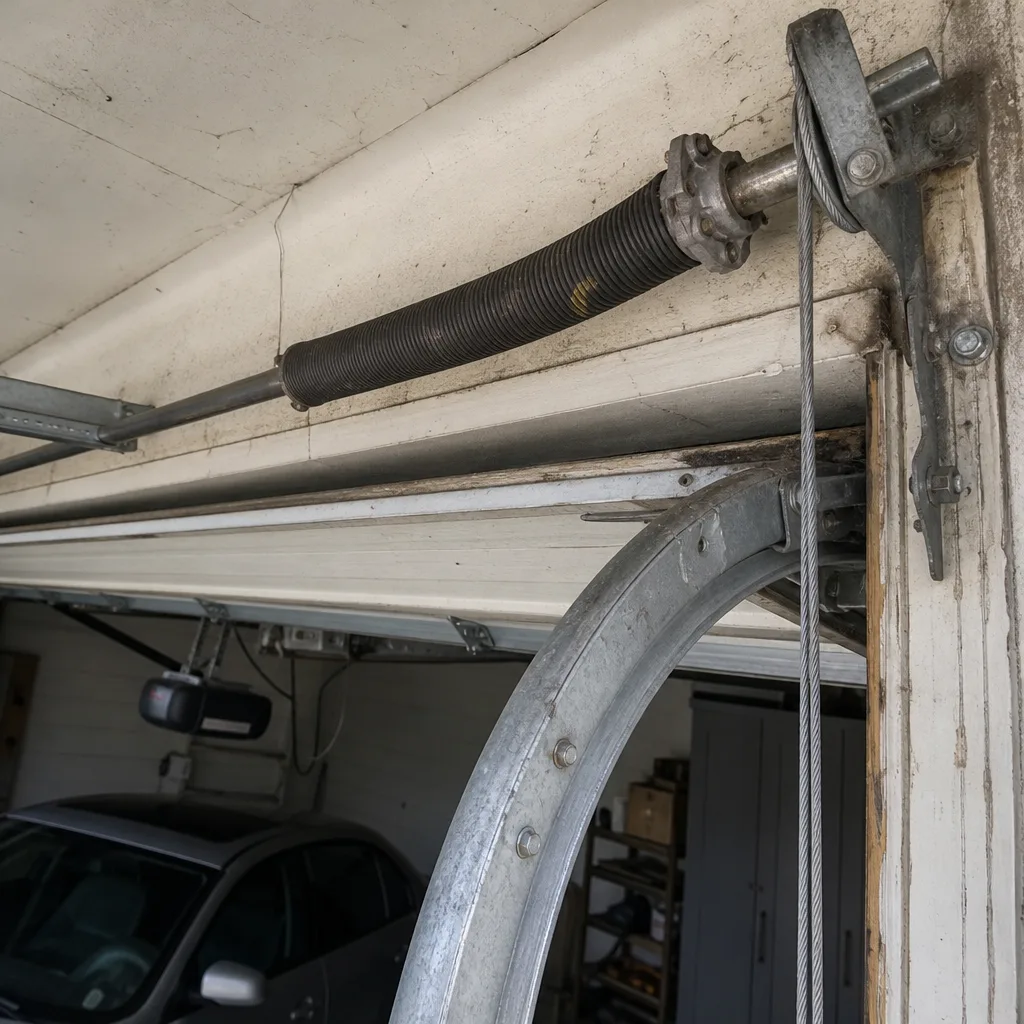
Rust is the first priority. Torsion springs especially. A spring with surface rust isn’t necessarily a safety issue, but rust on the coils creates friction as the spring winds and unwinds, which shortens its life. A garage door spring is under several hundred pounds of tension even when the door is open; a rust-weakened coil that fails under load is a dangerous event, not just an inconvenience. We recommend inspecting the torsion spring each March for rust spotting. If you see it, a light coat of spring oil applied by a technician is the right response. Do not attempt to clean or adjust the spring yourself: high-tension components can cause serious injury if mishandled. Call a professional for anything involving the spring.
Ground settling is the second spring priority. Clay-rich soil expands when wet and contracts when dry. In Camarillo, the soil under the driveway apron in front of the garage can shift a few millimeters during a wet winter, which is enough to throw the door’s track alignment slightly off. The symptom is a door that closes with a soft thud on one side, or a gap at the bottom corner. In neighborhoods built on compacted fill, like some areas of eastern Camarillo, this is more common than in the older flatland neighborhoods where the soil has been stable for decades.
Here’s the spring checklist:
- Inspect torsion springs for rust. Look at the coils. If you see orange or brown spots, schedule a professional spring inspection.
- Check bottom seal alignment. With the door closed, look at the bottom seal where it meets the concrete. A visible gap on one side means the door or the floor has shifted. The door can be adjusted; the floor cannot.
- Test the photo-eye alignment. Check that both sensor lights are solid (not blinking). A blinking light means alignment has drifted. Gently adjust the sensor until the light goes solid, then test the door.
- Check the track rails for rust. The galvanized surface coating on track rails usually holds up, but the bolt heads and the rail ends can show rust. Rust on the track face itself requires attention; rust on the bolt head is cosmetic.
Spring is also the right time to schedule a full professional tune-up if it’s been more than two years since the last one. A technician will check spring tension, door balance, track alignment, roller wear, opener force settings, and safety reversal. Our Statesman Garage Door Repair home service area covers all of Camarillo, and a spring tune-up is one of the best-value service calls a homeowner can make.
The One Task Most Homeowners Skip: Post-Santa Ana Hardware Inspection
Of all the seasonal tasks in this guide, this is the one our technicians wish more Camarillo homeowners would adopt. Santa Ana wind events push, flex, rattle, and loosen garage door hardware. The damage accumulates silently. A bolt that’s been worked loose by wind doesn’t necessarily cause an immediate problem: the door still opens, the opener still runs, and everything looks fine from the outside. But loose fasteners transfer stress to the parts they were holding, and that stress concentrates at the weakest point. A panel cracks. A track bracket pulls out of the wall. A roller stem bends. By the time the problem is visible, the repair is more expensive than the prevention.
The post-Santa Ana inspection should happen after the first major wind event of the fall, and ideally once more after any wind event with sustained gusts above 40 mph. Here’s the ten-minute version:
- Inspect all hinge bolts. Two bolts per hinge, every hinge. Check for movement by hand. Tighten any that are loose.
- Check all track brackets. Where the vertical and horizontal track meet the wall and ceiling, push laterally. If anything shifts, tighten the lag bolts.
- Check the operator arm. The arm that connects the opener to the door sees repeated force during every opening and closing. Check its attachment points on both ends.
- Inspect the bottom seal. Wind-driven grit accelerates weatherstrip wear. If the seal is torn or pitted, replace it before rain arrives.
- Run the door manually. Pull the release cord and move the door through its full travel. It should move smoothly, with no popping, grinding, or hitching.
These five checks take ten minutes. The payoff is longer hardware life and fewer mid-season breakdowns. We’ve seen Camarillo homeowners avoid major panel replacements by catching a loosened hinge bolt during this exact inspection. It’s a small effort with an outsized return.
A Month-by-Month Camarillo Maintenance Calendar
Here’s a simple monthly schedule you can print and tape inside the garage door panel. Each month has one specific task. Most take under fifteen minutes.
- January: Inspect and tighten all hinge and track bolts. Cool morning condensation means any loose hardware will be easier to feel by hand.
- February: Replace the bottom seal if it’s torn, compressed, or leaking daylight. This is the last dry month before any late-winter rain.
- March: Check torsion springs for rust spotting and check track rails for corrosion. This is the highest-risk month for spring failure after winter moisture.
- April: Test the safety reversal mechanism and clean the photo-eye lenses. Openers drift out of calibration over winter.
- May: Lubricate rollers, hinges, and bearing plates with a light lithium spray. Do this when the air is dry; lubricant applied in humid air can trap moisture.
- June: Inspect the bottom seal for marine-layer compression. Check that the door still opens and closes with consistent effort.
- July: Check the door balance manually. Summer humidity is at peak, and wood doors in Camarillo will be feeling it.
- August: Inspect panels for hairline cracks or paint blistering. Late-summer heat and UV exposure are most intense.
- September: Complete the post-Santa Ana hardware inspection described above. This is the most important task on the calendar.
- October: Clean all track surfaces with a dry cloth. Remove wind-deposited dust before it becomes grinding paste.
- November: Lubricate all moving parts again before the winter cool-down. Lighter lithium spray only; no heavy grease.
- December: Check opener force settings and test safety sensors. Cold mornings add resistance; make sure the opener handles it correctly.
If this calendar feels overwhelming, pick the four highest-value tasks: the March spring inspection, the September post-Santa Ana fastener check, the November lubrication, and the April safety test. Those four cover about 80% of the preventable issues we see in Camarillo.
Common Mistakes to Avoid
- Using WD-40 on any part of the garage door system. WD-40 is a solvent and will strip existing lubricant rather than replace it. Use a lithium-based garage door lubricant or a light machine oil instead.
- Applying grease to a belt-drive opener rail. Belt-drive openers from LiftMaster, Chamberlain, and Craftsman are designed to run dry. Grease on the belt accumulates dust, especially during Santa Ana season, and causes premature wear.
- Adjusting torsion springs without training. These springs hold several hundred pounds of tension. Improper adjustment has caused serious injuries. This is the one garage door task that should always go to a professional.
- Ignoring a door that suddenly runs slower in winter. That slow movement is a symptom, not a personality quirk. It usually means the lubricant has thickened or the opener is struggling against added resistance. Either way, addressing it early prevents opener burnout.
- Waiting to replace a compressed bottom seal until you see water. In Camarillo, a compressed seal also lets dust and hot air into the garage during Santa Ana season. Replace it when it’s compressed, not when it’s leaking.
- Painting over a rusted torsion spring. Paint traps moisture and accelerates the corrosion underneath. A professional spring inspection and light oil application is the correct response.
- Assuming a door that works today is fine. The whole point of seasonal maintenance is that failures develop gradually. A door can be silently accumulating problems for months before it stops working.
When to Call a Professional
Some garage door tasks are homeowner-appropriate: tightening hinge bolts, cleaning photo eyes, wiping down tracks, testing the safety reversal. Others are not. If you hear a loud bang from the garage (a spring failure), see visible rust on the torsion spring, notice the door is noticeably out of balance, hear grinding from the opener motor, or see track damage or wall anchors pulling loose, stop and call a professional. High-tension springs, cable assemblies, and opener gear replacements are dangerous for an untrained person to attempt. The same goes for any repair that requires working with the door in a raised, unsupported position.
If you’re in Camarillo and unsure whether a problem is a DIY task or a service call, err on the side of a phone call. Statesman Garage Door Repair offers free estimates in Camarillo, and we’re happy to tell you honestly whether something is worth fixing or worth leaving alone. Call (855) 341-8382.
Frequently Asked Questions
Twice a year: once in May after the rainy season ends and once in November before the winter cool-down. In Camarillo’s climate, these two points target the seasons when lubricant performance matters most. Use a lithium-based spray on rollers, hinges, and bearing plates, and a light penetrating oil on torsion springs. Skip the belt rail if you have a belt-drive opener.
Cooler temperatures in Camarillo’s winter months thicken heavy grease and cause rollers, hinges, and bearing plates to squeak. The fix is switching to a lighter lithium-based lubricant that maintains its viscosity in cooler coastal air. If the squeak persists after re-lubricating, the roller bearings themselves may be worn and in need of replacement.
Yes. Sustained gusts above 30 mph push against the door face and transfer force through the panels into the hinges, rollers, and track brackets. Repeated wind events loosen fasteners and misalign tracks, especially on exposed properties in Camarillo. A post-Santa Ana hardware inspection in the fall catches these issues before they lead to panel or track failure.
Some tasks are safe for homeowners: tightening hinge bolts, cleaning photo-eye lenses, wiping down tracks, testing the safety reversal, and lubricating rollers and hinges. Tasks involving torsion springs, cables, track replacement, or opener gear work should be left to a trained technician. Torsion springs in particular hold hundreds of pounds of tension and have caused serious injuries when mishandled.
A light lithium-based spray lubricant is the best all-purpose choice for Camarillo. It resists moisture during the marine layer months, doesn’t stiffen in cool winter mornings, and holds up in the dry heat of late summer. Avoid WD-40, silicone sprays that dry quickly, and heavy axle greases that gum up in cool air and collect Santa Ana dust.
Replace the bottom seal when it shows visible compression, tears, pitting, or when you can see daylight under a closed door. In Camarillo, marine-layer humidity in summer compresses rubber seals, and Santa Ana grit in fall accelerates wear. Treating the seal as an annual replacement item is the simplest approach; many Camarillo homeowners replace it each February after the Santa Ana season ends.
The Bottom Line
Camarillo’s climate doesn’t fit the standard four-season maintenance model. The marine layer compresses seals from June through August, Santa Ana winds loosen hardware and grind the tracks from September through November, cool winter mornings thicken lubricant, and spring reveals the rust and settling left by winter moisture. The maintenance calendar that works here is built around those local patterns, not a generic national checklist. If you remember nothing else from this guide, remember the post-Santa Ana hardware inspection and the twice-yearly lubrication. Those two tasks prevent more Camarillo garage door failures than anything else. When a problem does develop, whether it’s a worn seal, a stiff roller, a failing spring, or an opener that won’t calibrate, a quick call to (855) 341-8382 gets you a straight answer and a free estimate.
Written by the team at Statesman Garage Door Repair, serving Camarillo since 2018.
See the difference
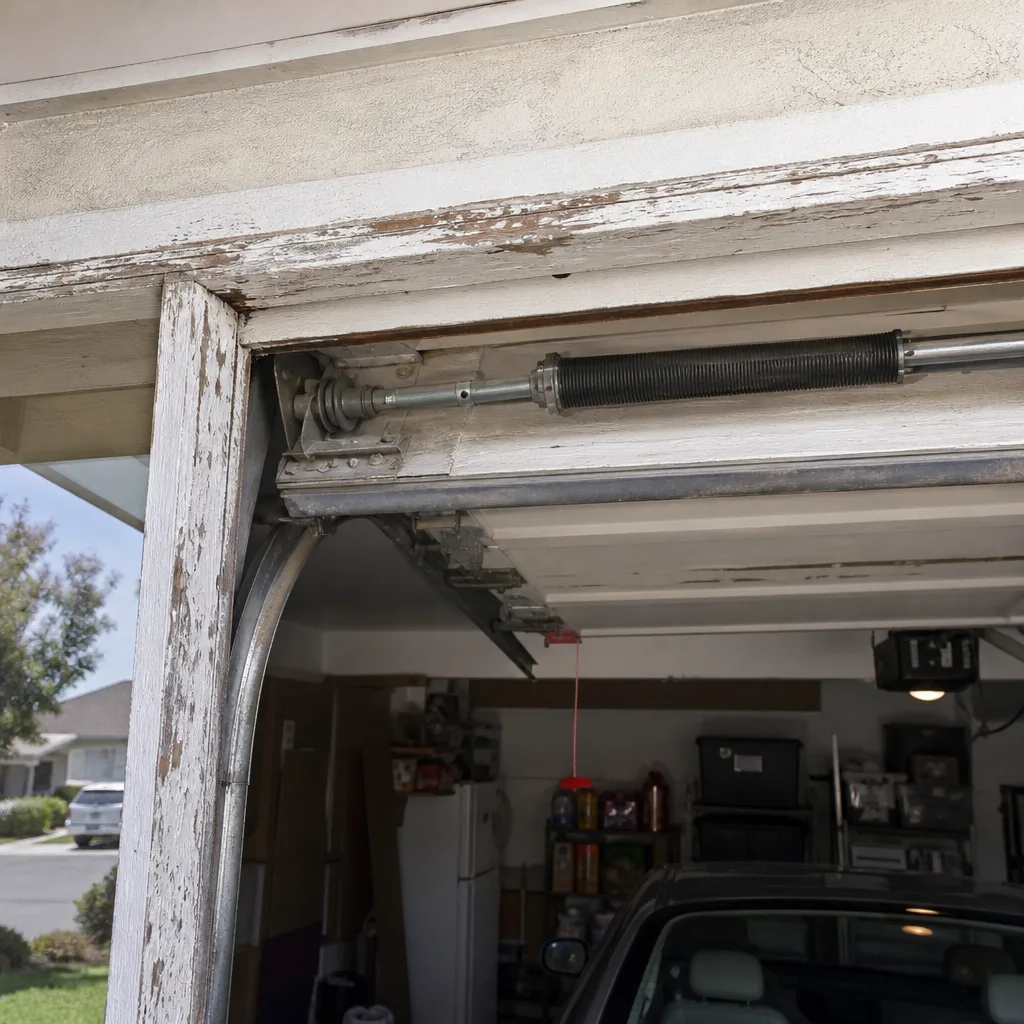 Before
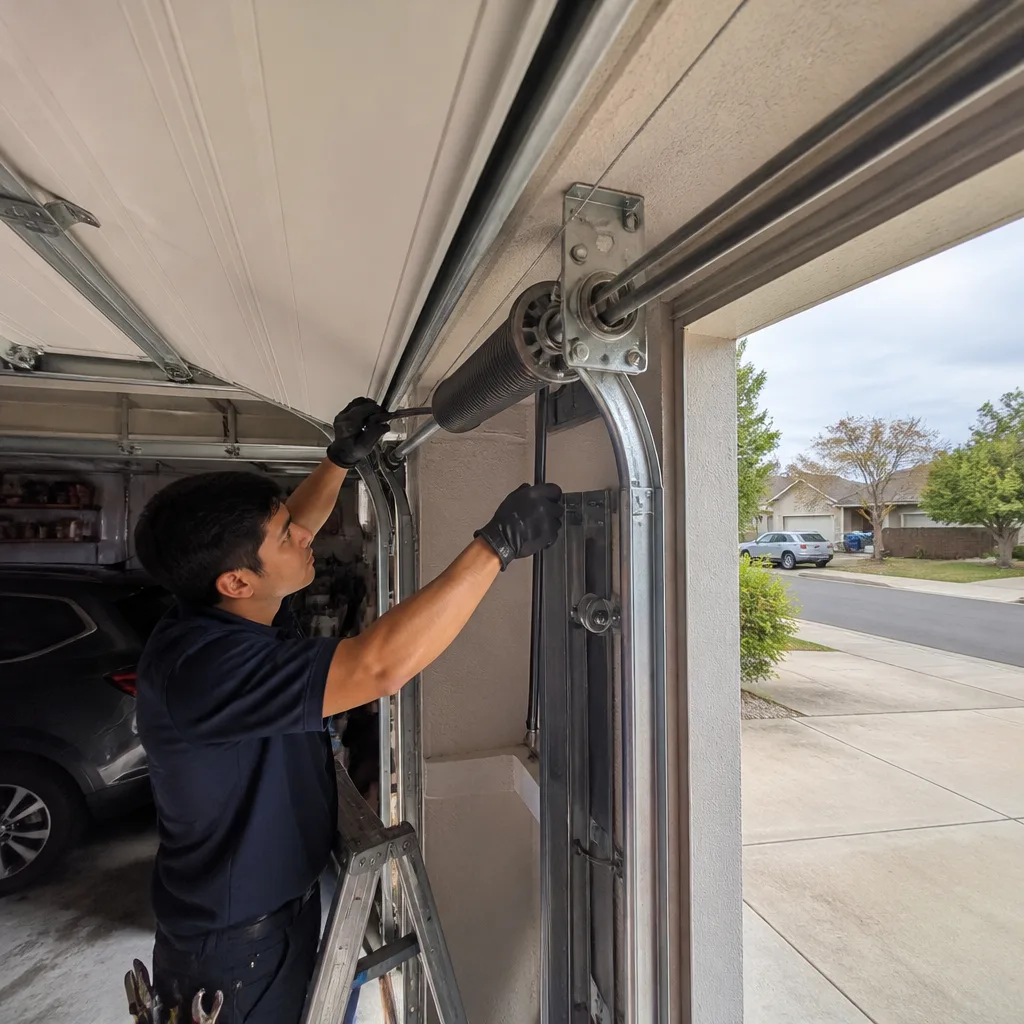 After
 Before
 After
 Before
 After