
Last updated November 2, 2026
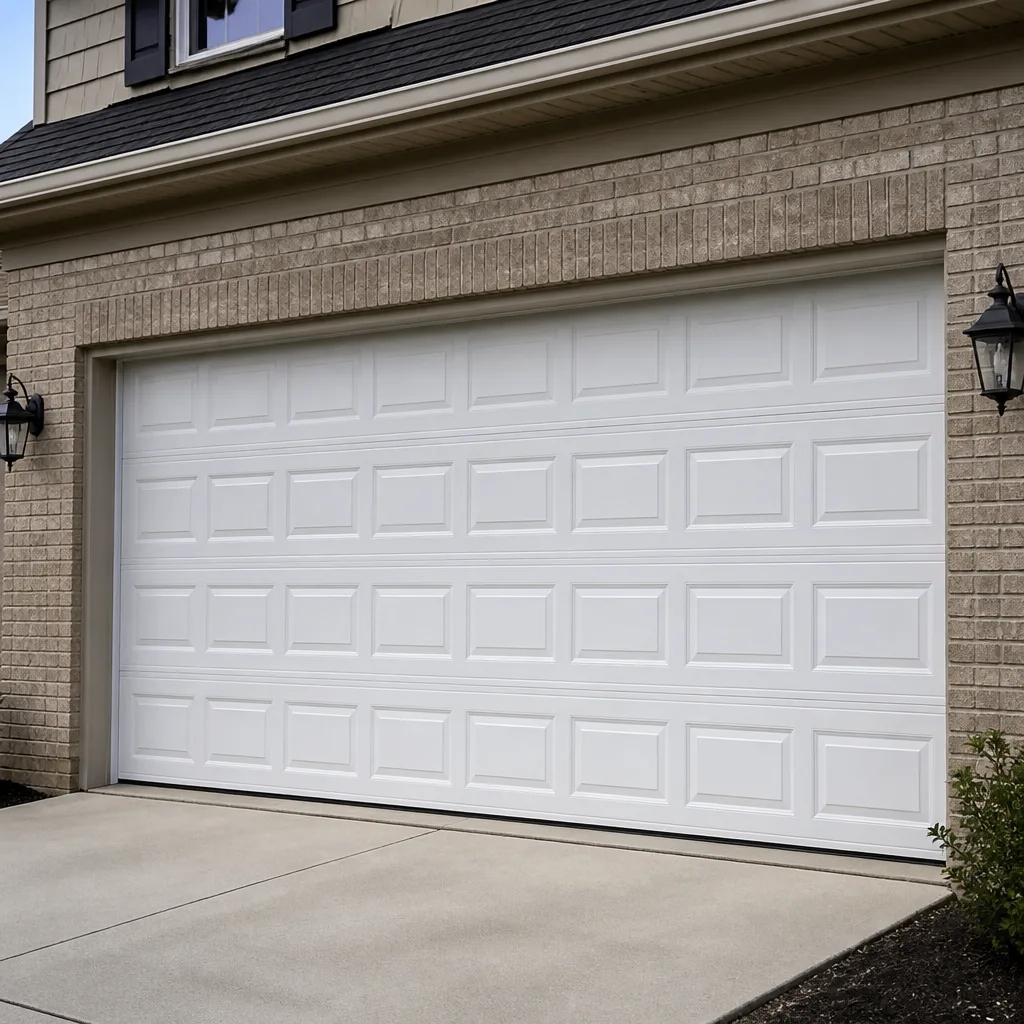 Raised-panel steel
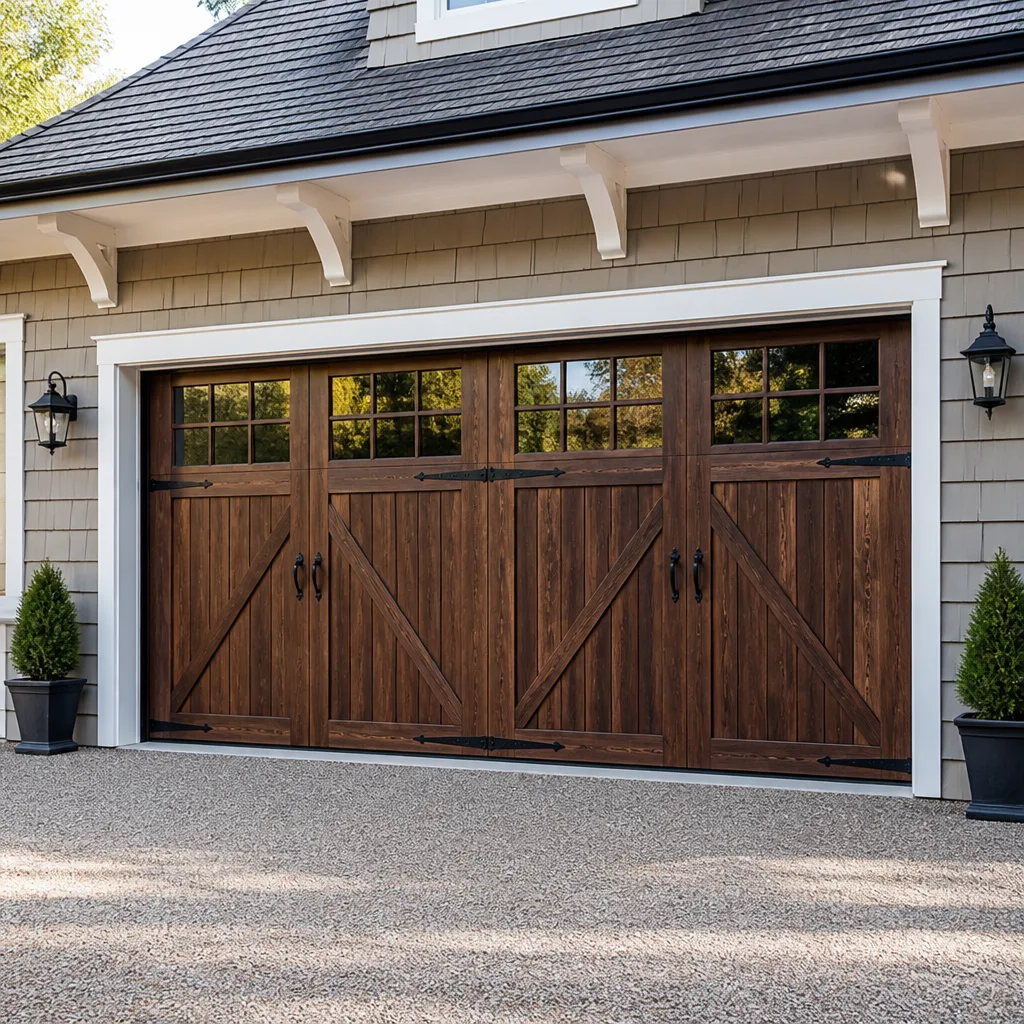 Carriage house
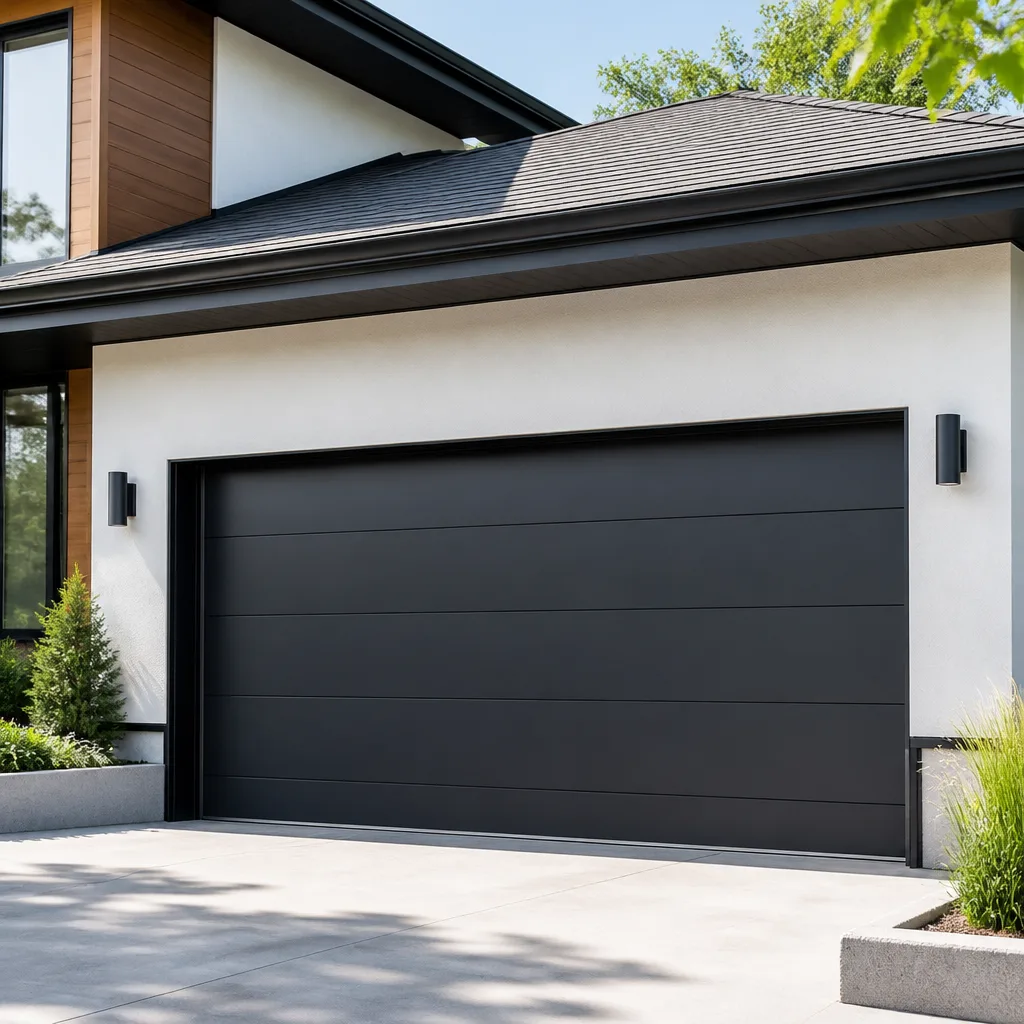 Modern flush
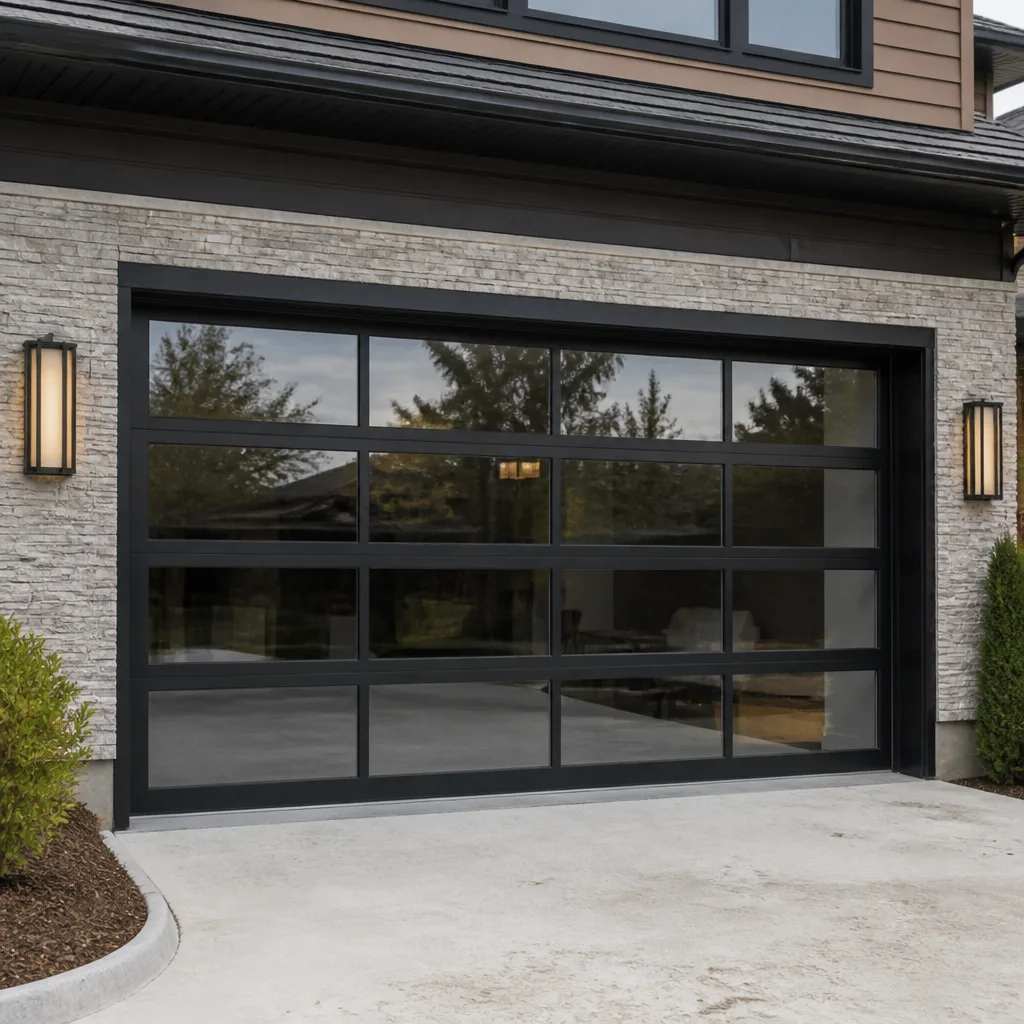 Full-view glass
 LiftMaster openers
 Chamberlain openers
Full 25-point door and opener safety check with every visit - springs, cables, rollers, tracks, and your LiftMaster or Chamberlain opener included
You get a price before we start. It does not change when the truck arrives.
Get your free estimateDIY vs Professional Garage Door: The Camarillo Homeowner’s Decision Guide
Here’s a fact most garage door guides won’t tell you plainly: torsion spring replacement causes more serious DIY injuries than nearly any other home repair task, yet the same Camarillo homeowner who should never touch a spring can safely handle four or five other garage door maintenance jobs that contractors routinely charge $150 or more to perform. The line between “do it yourself” and “call someone” isn’t about how handy you are. It’s about physics, tool costs, warranty language, and one specific Camarillo building-code requirement that most homeowners never see coming. This guide draws that line task by task, with honest numbers, so you can decide with confidence instead of a coin flip.
Styles & brands we work with
- Raised-panel steel
- Carriage house
- Modern flush
- Full-view glass
- LiftMaster openers
- Chamberlain openers
Quick Answer
Most garage door maintenance in Camarillo is safely DIY: lubrication, sensor alignment, weatherstripping, and visual inspection need no special tools and carry minimal risk. One task, torsion spring replacement, should never be DIY’d regardless of skill, because the spring stores hundreds of pounds of torque that releases instantly if a winding bar slips. Everything else sits on a spectrum where tool cost, time, and error risk determine whether a professional call actually saves you money. Statesman Garage Door Repair services all eight major residential door and opener brands in Camarillo, so when you do call, the technician recognizes your existing hardware on sight.
Table of Contents
- The Torsion Spring Exception: Why This One Task Is Different
- Genuinely Safe DIY Tasks for Camarillo Homeowners
- The Gray Zone: Tasks That Depend on Your Tools and Time
- Opener Repair: What DIY-Friendly Actually Means for Each Brand
- The Real Cost Math of Borderline Repairs
- Camarillo Permits and Code: When DIY Isn’t Legal
- Seasonal and Climate Factors Specific to Camarillo
- Common Mistakes to Avoid
- When to Call a Professional
- Frequently Asked Questions
- The Bottom Line
The Torsion Spring Exception: Why This One Task Is Different
A residential torsion spring on a double-wide garage door holds roughly 100 to 160 pounds of torque per spring when fully wound. That energy is what lifts a 200-pound door with what feels like one finger on the handle. When a spring snaps, it doesn’t just break; it unwinds in about a tenth of a second. Put your hand or face in the path of that release and the result is a degloving injury, compound fracture, or worse. This isn’t a scare tactic. Camarillo emergency rooms see these injuries every year, and the mechanics are the same in Camarillo Heights or Mission Oaks as anywhere else: the tool you’re using is a pair of steel winding bars, and the moment they slip out of the cone, the stored energy goes somewhere instantly.
What makes this categorically different from replacing a toilet fill valve or swapping out a light switch is that there is no intermediate failure mode. Other home repairs fail gradually; you see the leak, hear the rattle, smell the wiring. A torsion spring under load either holds or it doesn’t, and when it doesn’t, it doesn’t warn you first. Professional training for this task involves not just technique but a specific respect for the tool-to-cone interface: the bars have to seat fully in the cone holes, matched in diameter, with the installer standing to one side at all times. Winding a spring to seven and a half turns on the bar and watching the cone shift a millimeter tells a trained technician something a first-timer simply cannot read.
One genuine argument some guides make for DIY spring replacement is cost: the parts are $60 to $120, and a professional charges $180 to $340 in Ventura County. That savings evaporates the moment a winding bar slips. Even if you avoid injury, a mis-seated bar can chew out the cone, which means replacing the entire spring assembly rather than the single broken spring, and now you’re in for $300 in parts alone. The Camarillo market doesn’t change this math. We’ve seen homeowners in Spanish Hills attempt this after watching a video, and the outcome usually involves a door stuck half-open in a wind-prone canyon, which is a worse place to be than the original problem. The Garage Door Repair in Camarillo page on our site explains what a full inspection should include, and spring replacement is always at the top of the list.
Genuinely Safe DIY Tasks for Camarillo Homeowners
Now for the counterintuitive part. The same homeowner who should never touch a torsion spring can safely perform these five maintenance tasks, and doing them regularly will extend the life of a door in Camarillo’s dry, occasionally gusty climate. None of these require removing tension from the spring system, and none involve working under the door or inside the tracks.
1. Lubricating Moving Parts (Every 6 Months)
The hinges, rollers, and bearing plates on a garage door need lubrication, and this is the cheapest maintenance you can do. Use a spray lithium grease or silicone lubricant, not WD-40, which is a cleaner and not a lubricant. Apply to the hinge pins, the roller stems, and the torsion spring itself, which benefits from a light coat to prevent rust. In Camarillo’s dry air, metal parts don’t corrode quickly, but the fine dust from the Santa Ana winds works its way into unlubricated bearings and accelerates wear. This task takes twenty minutes and costs about $8 for a can that lasts two years.
2. Cleaning and Aligning Safety Sensors
Those two photoelectric eyes at the bottom of the door frame prevent the door from closing on a car, a child, or a bicycle. When they misalign, the opener refuses to close the door, or reverses mid-close. The fix is usually as simple as wiping the lens with a dry cloth and nudging the bracket until the small amber LED lights up steadily. The sensors sit low to the ground, which means Camarillo’s fine dust coats them regularly. This is a five-minute fix that homeowners all over Camarillo handle themselves, and the most common emergency service call for openers in this area is, frankly, a dirty sensor we wipe clean and realigne in ninety seconds.
3. Replacing Bottom Weatherstripping
The rubber seal along the bottom of the door rots, cracks, and lets in dust, rain (rare but real in Camarillo winters), and pack rats seeking shelter. Replacing it is straightforward: slide the old strip out of the aluminum channel, cut the new strip to width, and slide it in. A 16-foot roll of replacement seal costs $20 to $35 at any Camarillo hardware store. No tools beyond a utility knife and possibly pliers. The doors in newer developments like Village at the Park hold seals well, but older Mission Oaks homes with 1990s-installed doors have channels that need a shot of spray lubricant before the new strip slides.
4. Tightening Loose Hardware
Garage doors cycle hundreds of times a month, and every cycle vibrates bolts, nuts, and track brackets. Once or twice a year, go around the door with a socket set and snug up the bolts on the hinges, the track brackets, and the roller assemblies. Do not touch the bolts on the torsion spring cones; those are under tension and shouldn’t be adjusted. Everything else is fair game. This takes thirty minutes and prevents the most common source of “mystery” door noises, which in Camarillo’s quiet suburban streets you’ll hear from the kitchen far more than you want to.
5. Visual Inspection of Cables and Rollers
Look at the lift cables that run up the sides of the door. Check for fraying, kinks, or rust. Look at the rollers, especially the nylon wheels that ride in the tracks. If you see cracks in the nylon or flat spots on steel rollers, you’ve caught a failure before it strands your car inside the garage on a Tuesday morning. Flagging these issues and replacing rollers is borderline DIY; replacing cables absolutely is not, because cables also carry spring tension. The inspection itself is safe, costs nothing, and tells you when to call before the door fails mid-cycle. If you see something that worries you, the Garage Door Repair in Camarillo team can inspect it and confirm whether replacement is needed.
These five tasks are where the DIY-vs-professional line should actually sit. None of them release stored energy. None of them require a permit. None of them void a warranty. And all of them keep a door running longer, which is precisely why professional services that upsell “annual maintenance plans” for $99 to $200 are often selling tasks you can do in an afternoon.
The Gray Zone: Tasks That Depend on Your Tools and Time
Between the clearly safe and the clearly dangerous sits a middle band of repairs where the math depends on your garage situation: the age of your door, what tools you own, and how much your free time is worth. These are the decisions Camarillo homeowners actually face, and honest guidance here is harder to find than simple “never DIY” or “just YouTube it” advice.
Roller Replacement
Replacing worn rollers is mechanically simple on the bottom and center positions. You remove a hinge bolt, pop out the old roller, slide in the new one, and re-secure. The top and bottom rollers are a different story. The bottom roller bracket is attached to the cable, which carries spring tension, so you cannot remove that bracket without either unloading the spring (never DIY) or risking a cable whipping loose. The top roller sits near the curve of the track, and removing it usually requires bending the track outward or loosening the track bracket. Some homeowners do this successfully with a pry bar and patience; others bend the track and create a binding problem that makes the door worse than before. Our position at Statesman Garage Door Repair: replace the center rollers yourself if you’re comfortable with a socket wrench. Leave the top and bottom rollers to a professional who can release the tension safely. A full roller replacement in Camarillo runs $110 to $180 including parts and labor, and it’s part of our standard Garage Door Repair in Camarillo service.
Track Cleaning and Minor Alignment
If the track has debris or caked-on grease, cleaning it with a rag and degreaser is safe and easy. Minor alignment issues, where the track is slightly out of level causing the door to bind, are sometimes fixable by loosening track brackets and tapping the track with a rubber mallet. The risks: if the track is significantly out of square, you’ll chase it in circles, and if the door binds mid-cycle, the cable can jump the drum and weld itself into a rat’s nest. A door that binds but picks up again is often a track issue; a door that jams hard and refuses to move may be a cable or spring problem. If you’re unsure which, call before forcing it. Forcing a bound door under motor power is how doors bend and openers burn out, two problems that cost far more than a $90 track adjustment.
Replacing the Rubber Seal Along the Sides and Top
This is almost as simple as the bottom seal, but the retaining channels on older Wayne Dalton and Craftsman doors in Camarillo can be brittle, and prying the old seal out of a cracked channel just creates more work. If your door is from the early 2000s and the plastic channel feels rigid, consider doing the bottom seal only and leaving the side seals to a pro who can replace the channel material as part of the job.
Opener Repair: What DIY-Friendly Actually Means for Each Brand
Garage door opener brands market some units as “DIY install,” and that’s true for a full replacement: LiftMaster, Chamberlain, Genie, and Craftsman all sell openers at big-box stores with bracket kits and instructions aimed at the competent weekend installer. Replacing an entire opener unit on a Saturday is a four-to-six hour job for a first-timer, and it’s mechanically safe because you’re not touching the spring system. The catch is in the middle layer of repair work: the logic board, the gear-and-sprocket assembly, and the travel limit adjustments. These jobs are trickier than the manufacturers’ marketing implies, and the warranty implications differ by brand.
The Logic Board Problem
A logic board replacement on a modern LiftMaster or Chamberlain is plug-and-play on some models: you unplug the unit, pop the cover, disconnect six or eight spade connectors, swap the board, and reassemble. On other models, the board is soldered to the motor harness, and replacing it requires a soldering iron and a willingness to void the warranty instantly. We service openers across all eight major brands at Statesman, including LiftMaster, Chamberlain, Genie, Clopay, Amarr, Wayne Dalton, Craftsman, and Raynor, and what “DIY-friendly” means in practice is that some boards are designed for field replacement and others are not. Before you order a $90 generic replacement board online, verify the model number against the manufacturer’s parts diagram. A mismatched board can brick the unit. If your opener is a Raynor or a Genie from before 2015, the board is likely integrated and a professional replacement may be the only option.
The Gear-and-Sprocket Assembly
Chain-drive openers, especially older Craftsman models still common in Camarillo’s more established neighborhoods, wear out a plastic gear inside the motor head after about 10 to 15 years. The symptom is a motor that runs but the chain doesn’t move. A replacement gear kit costs $25 to $40 and the swap takes an hour and a half if you’ve never done it before. It’s greasy, the clip rings are fiddly, and you’ll want a decent pair of snap-ring pliers. This is borderline DIY: it won’t hurt you, but if you install the gear slightly off-axis or forget to grease the new gear, you’ll be back inside in six months. It’s also worth checking whether the door is balanced first; an unbalanced door is what destroys gears in the first place, and Garage Door Opener Repair in Camarillo should include that check as standard.
Warranty Language Matters More than Skill
Here’s the piece most guides miss. LiftMaster and Chamberlain warranties run 10 years to limited lifetime on the motor and belt, but the fine print on most models states the opener must be installed and serviced by a qualified technician for the warranty to remain valid. A homeowner replacing a logic board, opening the motor head for gear service, or rewiring the safety circuit may void the remainder of the motor warranty. Genie’s policy is similar on higher-end units. If your opener is three years old and the motor has a lifetime warranty building on it, a $75 DIY gear replacement that voids the motor warranty is a losing trade. When we do Garage Door Opener Repair in Camarillo at Statesman, the work keeps the remaining manufacturer warranty intact, and that’s a factor worth pricing into the decision.
The Real Cost Math of Borderline Repairs
Most DIY-vs-professional articles compare parts cost to service cost and call that the savings. That’s the wrong lens. The honest math has three additional variables: the tools you need to buy, the value of your time, and the cost of error when the repair goes sideways. Here’s how that plays out on three common Camarillo garage door jobs.
Job 1: Replace Bottom Weatherstripping
- Professional cost in Camarillo: $90 to $140 for parts and labor
- DIY parts cost: $20 to $35
- Tools needed: Utility knife, pliers, possibly a flathead screwdriver (all items most households own)
- Time required: 30 to 60 minutes for a first-timer
- Error risk: Very low; worst case is a seal that doesn’t sit flush and needs re-installation
- Verdict: Clear DIY. The savings are real, the risk is negligible, and you’ll do it again in five years with the leftover material’s knowledge.
Job 2: Replace Worn Center Rollers
- Professional cost in Camarillo: $110 to $180 for a full roller set including top and bottom
- DIY parts cost: $10 to $16 per roller for nylon; $40 to $60 for a set of ten
- Tools needed: Socket set, possibly a second pair of hands (usually owned)
- Time required: 2 hours if you’re cautious and methodical
- Error risk: Moderate; stripping a hinge bolt or dropping the door off a misaligned roller creates new problems
- Verdict: Defensible DIY for center rollers only. The pro cost includes top and bottom rollers that require tension handling, so if you do center rollers yourself and call for the rest later, you’ve wasted some labor overlap. Better to decide all at once.
Job 3: Replace Garage Door Opener Gear-and-Sprocket Kit
- Professional cost in Camarillo: $180 to $280 including the part and labor on most chain-drive models
- DIY parts cost: $25 to $40 for the kit
- Tools needed: Snap-ring pliers ($15 to $25 if you don’t own them), needle-nose pliers, socket set, spray degreaser, lithium grease
- Time required: 3 to 4 hours for a first-timer, including watching a video twice
- Error risk: High; misalignment shortens the new gear’s life, and missing a worn sprocket means the chain slips again within weeks
- Verdict: Only DIY if your opener is old enough that warranty status doesn’t matter, you enjoy this kind of work, and you don’t mind losing a Saturday afternoon. Otherwise, the professional route is cheaper than the time it takes, before factoring in any error cost.
The pattern across these three examples is the point. The math isn’t consistent, and a blanket “professionals always cost more” or “DIY is always a mistake” is wrong. Weatherstripping is a no-brainer. Center rollers are reasonable. Gear kits are a judgment call. Each task gets evaluated on its own numbers, and in Camarillo’s market those numbers don’t shift much from what we see across the rest of Ventura County.
Camarillo Permits and Code: When DIY Isn’t Legal
Here’s the Camarillo-specific factor most guides never mention, and it’s not about skill at all. The City of Camarillo Building and Safety Division requires a permit for several categories of garage door work in certain circumstances. A direct replacement of a door on an existing opening typically does not require a permit, which is why most repair work and same-size door swaps fly under the radar. But when a homeowner enlarges a door opening, changes the header, or converts a solid wall to a new garage door opening, a permit is required, and the stamped plans must come from a licensed contractor or engineer. That’s not a recommendation; that’s city code.
The legal issue arises because DIY work cannot be self-inspected. If you install a new door opening yourself, cut the stucco, frame the header, and hang the door, you still need a Camarillo building inspector to sign off, and that inspector will want to see the structural calculations for the header. A professional installation includes the engineering and the permit coordination as part of the project. This isn’t about whether a homeowner can frame a wall; it’s that the City of Camarillo will not issue a certificate of occupancy for unpermitted structural work, and unpermitted work becomes a title disclosure issue when you sell the house. Real estate transactions in Camarillo have stalled over exactly this.
For standard door replacement and repair, the permit issue is rarely a factor. The City of Camarillo treats like-for-like replacement as maintenance, not construction. But if you’re considering a new door in a different size, or adding a second garage door, this is a professional job before it’s anything else, not because of springs and cables but because of building code. Our Garage Door Installation in Camarillo service handles the engineering and permit pathway for new openings, and we’ve coordinated with the City of Camarillo permitting office on exactly these projects.
Seasonal and Climate Factors Specific to Camarillo
Camarillo has a mild, semi-arid climate with two weather patterns that matter for garage door maintenance: the Santa Ana winds in fall, and the occasional heavy rain event in winter. Neither is extreme, but both shape what wears out first on a garage door here.
Santa Ana winds push fine grit and dust into every exterior gap. Garage door tracks sit at ground level, and after a solid wind event, the tracks fill with a fine powder that works into roller bearings and creates a grinding sound that Camarillo homeowners notice more than most. The symptom is a door that suddenly sounds harsh, or a roller that wobbles in the track. The fix is usually cleaning and lubrication, not replacement, and catching it early prevents a $12 roller failure from becoming a $150 track repair. Wind also flexes doors slightly, especially lighter aluminum doors on older homes, and loose track bolts are often discovered after the first Santa Ana of the season.
Rain events are infrequent in Camarillo but consequential when they arrive. A bottom seal that’s cracked lets water pool on the garage floor and wick up into drywall. In a climate this dry, small leaks cause disproportionate damage because homeowners are not expecting them. The soil here also shifts slightly with moisture, and a slab that settles a quarter inch changes the door-to-frame gap enough that a previously flush seal now leaks. No DIY fix addresses slab movement; that’s a case where the seal replacement is a band-aid and a professional assessment of the door’s level matters more.
The Camarillo climate rarely causes spring failure on its own; torsion springs are rated for 10,000 to 20,000 cycles regardless of weather. But the steel does rust faster in coastal areas than inland, and Camarillo sits close enough to the coast to get marine layer mornings in June and July that leave condensation on uninsulated metal parts. A spring with surface rust on the coils has a shorter fatigue life. This is why lubrication matters here, even though the climate isn’t humid in any meaningful way. A homeowner who lubricates springs and bearings twice a year in Camarillo gets measurably more cycles out of the same hardware than one who doesn’t.
Common Mistakes to Avoid
- Attempting torsion spring replacement without training or proper winding bars. This is the single most dangerous DIY task in residential repair, and the injury rate is not a statistical abstraction; Camarillo emergency departments see degloving and fracture injuries from garage door springs every year. Use a professional for this work, period.
- Using WD-40 as a garage door lubricant. WD-40 is a water displacer and cleaner, not a lubricant; it strips away existing grease and leaves moving parts drier than before. Use white lithium grease or a garage-door-specific spray.
- Assuming a noisy door just needs oil. Noise often indicates worn rollers, a failing bearing plate, or a cable that’s beginning to fray. Lubricating over those problems masks the symptom for a few weeks and lets the underlying issue worsen.
- Replacing a garage door opener logic board without checking the model’s warranty status. Many Camarillo homeowners learn too late that opening the motor head on a LiftMaster or Chamberlain unit voided the remaining motor warranty, turning a $75 board swap into a $280 full replacement.
- Thinking “it costs more, so the professional must be overcharging.” The Camarillo service prices for most garage door tasks reflect not just labor but tool investment, insurance, warranty backing, and the risk-adjusted cost of working with loaded springs every day. A $180 roller replacement is not a $40 parts job with profit padding; it’s a $40 parts job plus tension handling and liability.
- Forcing a bound door with the opener motor. If the door won’t move, continuing to press the button damages the motor, bends the door panels, and frequently turns a $100 track adjustment into a $500 repair. Release the emergency cord and call for service before forcing anything.
- Ignoring the “door occasionally reverses” symptom. In Camarillo’s dusty conditions, sensors get dirty and doors reverse mid-cycle. If cleaning the sensor lenses doesn’t fix it, the problem is often an unbalanced door or a worn gear, and both get worse with continued use.
When to Call a Professional
Call a professional when the job involves the spring system in any form: broken springs, cable replacement, cable drum rewinding, or any repair that requires unloading the torsion assembly. Call when the door is visibly out of level or binds during travel, because forcing it makes every connected component worse. Call when the opener motor runs but the door doesn’t move, which typically means a stripped gear and requires opening the motor head. Call when warranty protection matters: any internal opener work on a unit under manufacturer warranty is best handled by a professional so the coverage remains intact. And call when Camarillo permits apply, such as a new door opening or structural header modification. Statesman Garage Door Repair home covers all three core services, repair, opener repair, and installation, across the eight major door and opener brands we service. If you’re in Camarillo, we offer free estimates, quoted and agreed before any work begins, and you can call (855) 341-8382 to schedule.
Frequently Asked Questions
No. Torsion spring replacement is the one garage door task that should never be DIY’d, regardless of skill level, because a wound spring stores enough torque to cause catastrophic injury if a winding bar slips. The parts cost savings of $100 to $200 doesn’t justify the risk, especially when professional spring replacement in Camarillo includes the spring, labor, and a rebalanced door for $180 to $340. Call (855) 341-8382 for a free estimate; we quote the price before any work begins.
You can safely lubricate hinges, rollers, and springs every six months; clean and realign the safety sensors; replace bottom weatherstripping; tighten loose track and hinge bolts; and visually inspect cables and rollers for wear. These tasks don’t release spring tension, require no permit, and keep the dust from Camarillo’s Santa Ana winds out of the tracks and bearings.
No permit is required for direct like-for-like replacement of a garage door on an existing opening. A permit is required if the opening size changes, a header is modified, or a new door opening is created, and the Camarillo Building and Safety Division will need stamped plans from a licensed contractor or engineer. Call (855) 341-8382 if you’re not sure which category your project falls into.
Most garage door repairs in Camarillo run between $90 and $340 depending on the task: weatherstripping replacement is $90 to $140, roller replacement is $110 to $180, opener gear replacement is $180 to $280, and torsion spring replacement is $180 to $340. The exact price depends on your door model and hardware, and every quote at Statesman is agreed upon before work starts. Check our Garage Door Repair in Camarillo page for service details.
A gear-and-sprocket replacement on a Craftsman chain-drive opener costs $180 to $280 professionally and extends the unit’s life by several years, so if the motor is quiet and the door is balanced, repair usually makes sense. The decision flips to replacement when the logic board fails, the motor shows bearing wear, or the unit predates current safety sensor standards. Statesman services all major opener brands including LiftMaster, Chamberlain, Genie, Craftsman, and Raynor, so we can diagnose your existing opener and give you an honest repair-vs-replace recommendation.
Our technicians carry common replacement parts for the eight major garage door and opener brands we service, including LiftMaster, Chamberlain, Genie, Clopay, Amarr, Wayne Dalton, Craftsman, and Raynor, so most repairs are completed in a single visit. When a specialized part is needed, we source it from our Camarillo-placed suppliers and return as soon as it’s in hand. Call (855) 341-8382 and we’ll tell you honestly whether your repair is likely same-day.
The Bottom Line
The DIY-vs-professional decision for garage doors in Camarillo isn’t a single answer; it’s a task-by-task evaluation. Five maintenance jobs are genuinely safe and worth doing yourself: lubrication, sensor cleaning, weatherstripping, hardware tightening, and visual inspection. One job is never worth the risk: torsion spring work. Everything else, from rollers to opener gears to track adjustments, sits in a middle zone where your tool inventory, warranty status, time value, and tolerance for error decide the outcome. Camarillo adds a permit layer when structural changes are involved, and the Coastal Santa Ana climate makes dust management a local maintenance priority. When in doubt, Garage Door Installation in Camarillo and Garage Door Opener Repair in Camarillo are services Statesman provides under one roof, with free estimates and upfront pricing. Call (855) 341-8382 to talk through your specific situation.
Written by the team at Statesman Garage Door Repair home, serving Camarillo since 2018.
See the difference
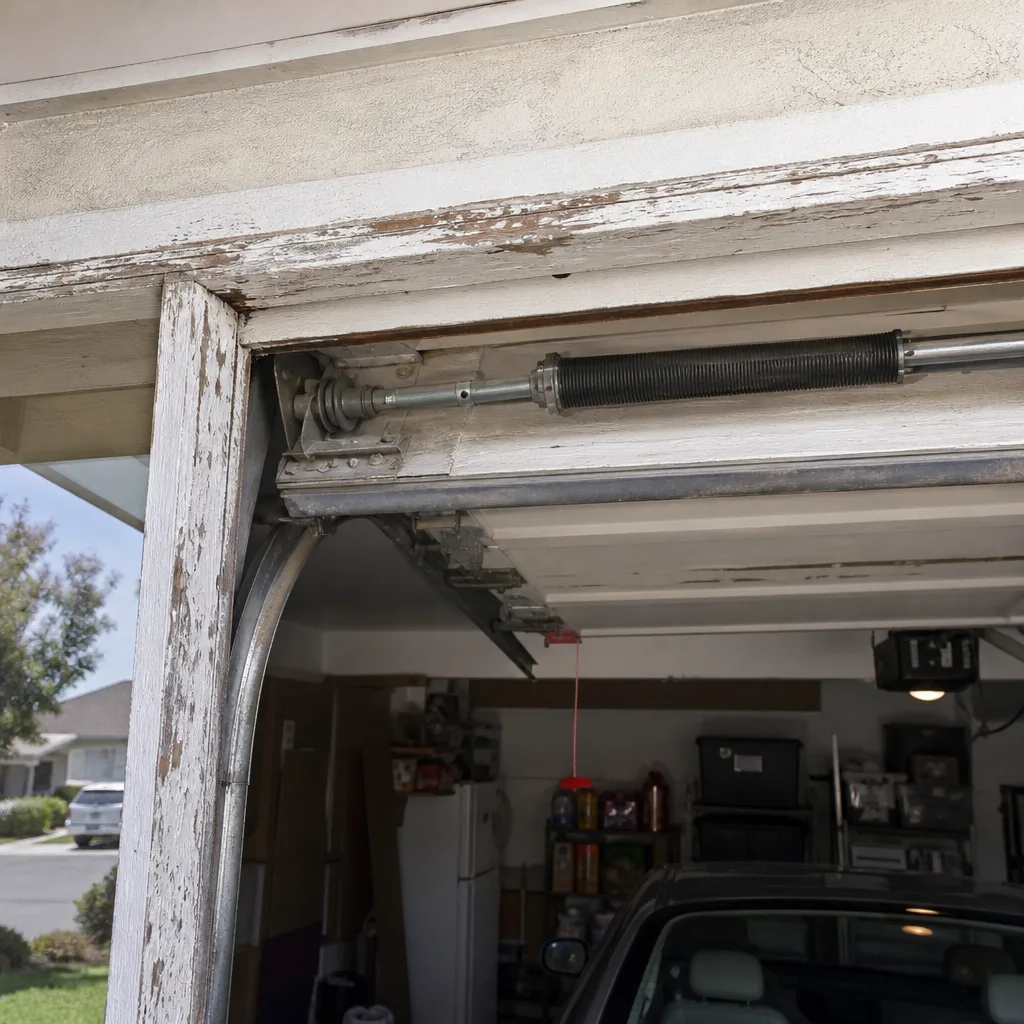 Before
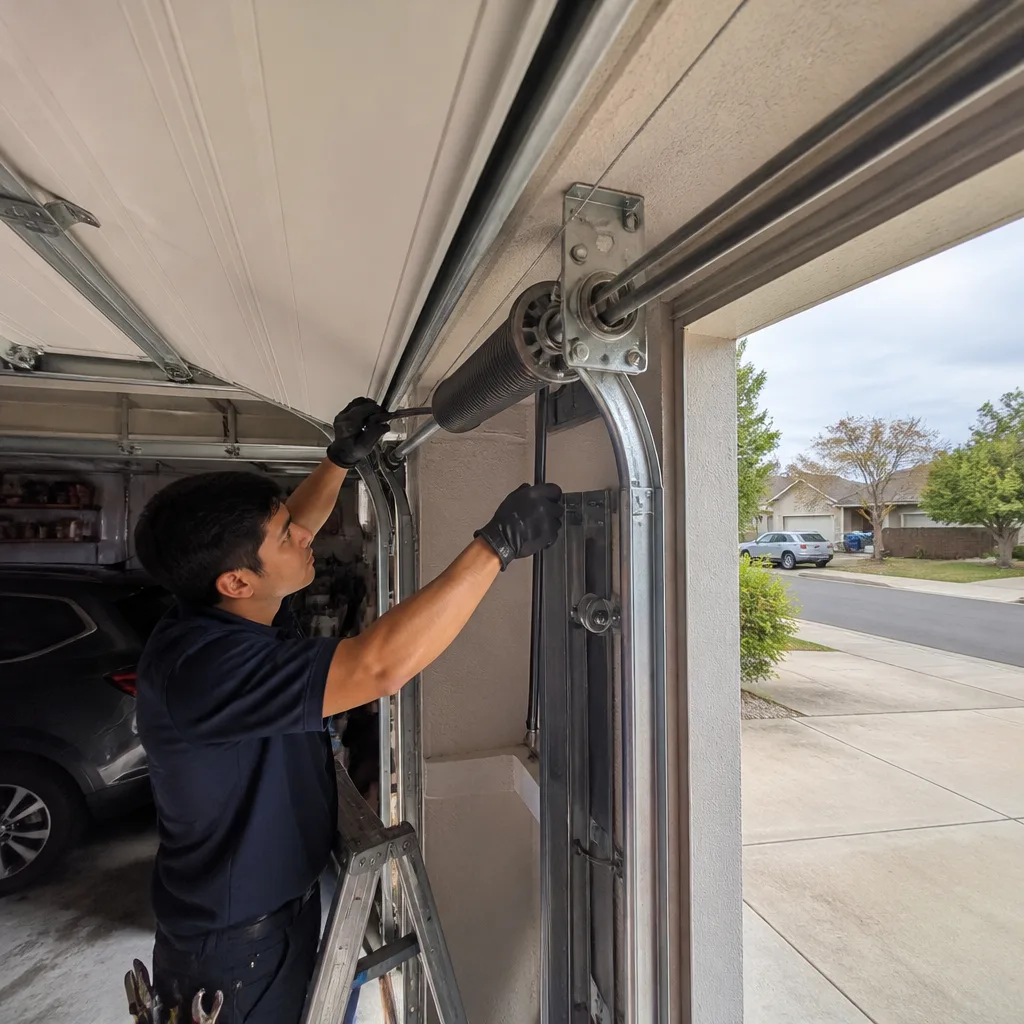 After
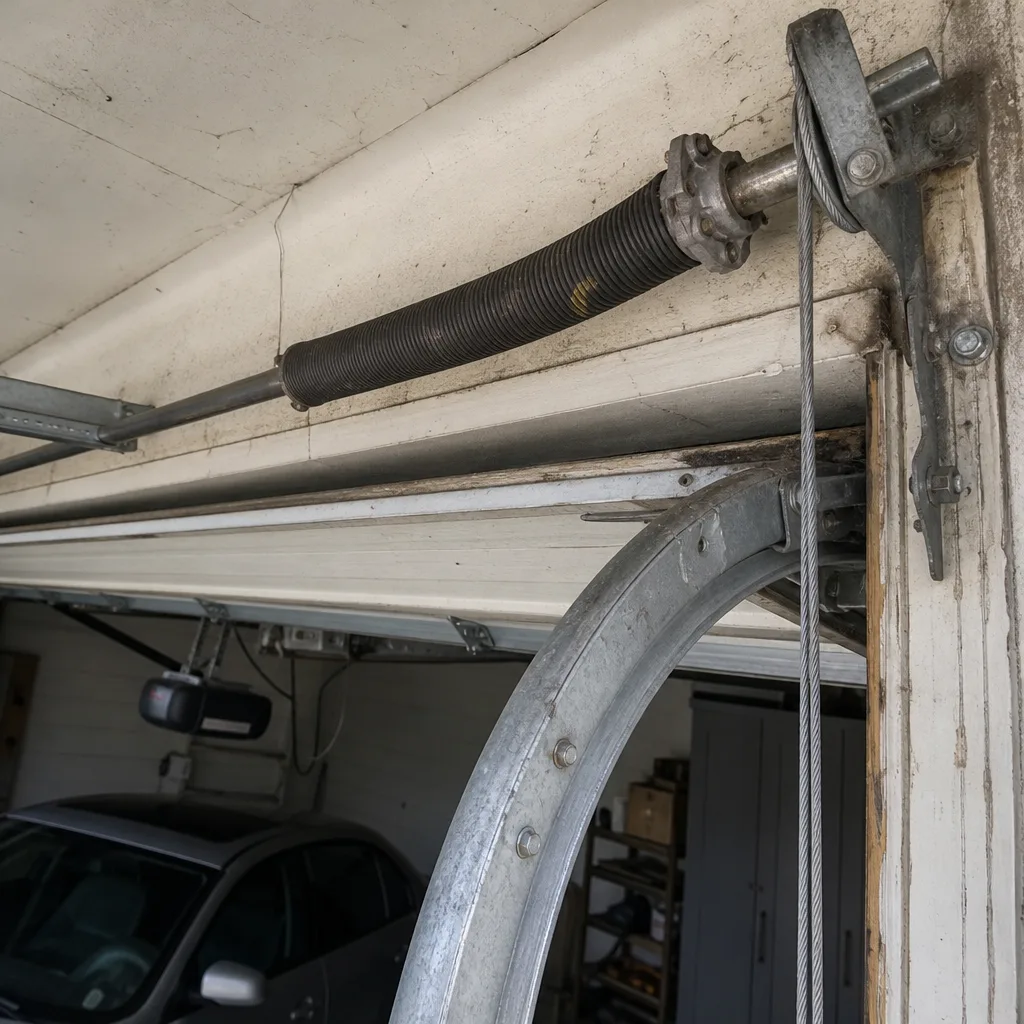 Before
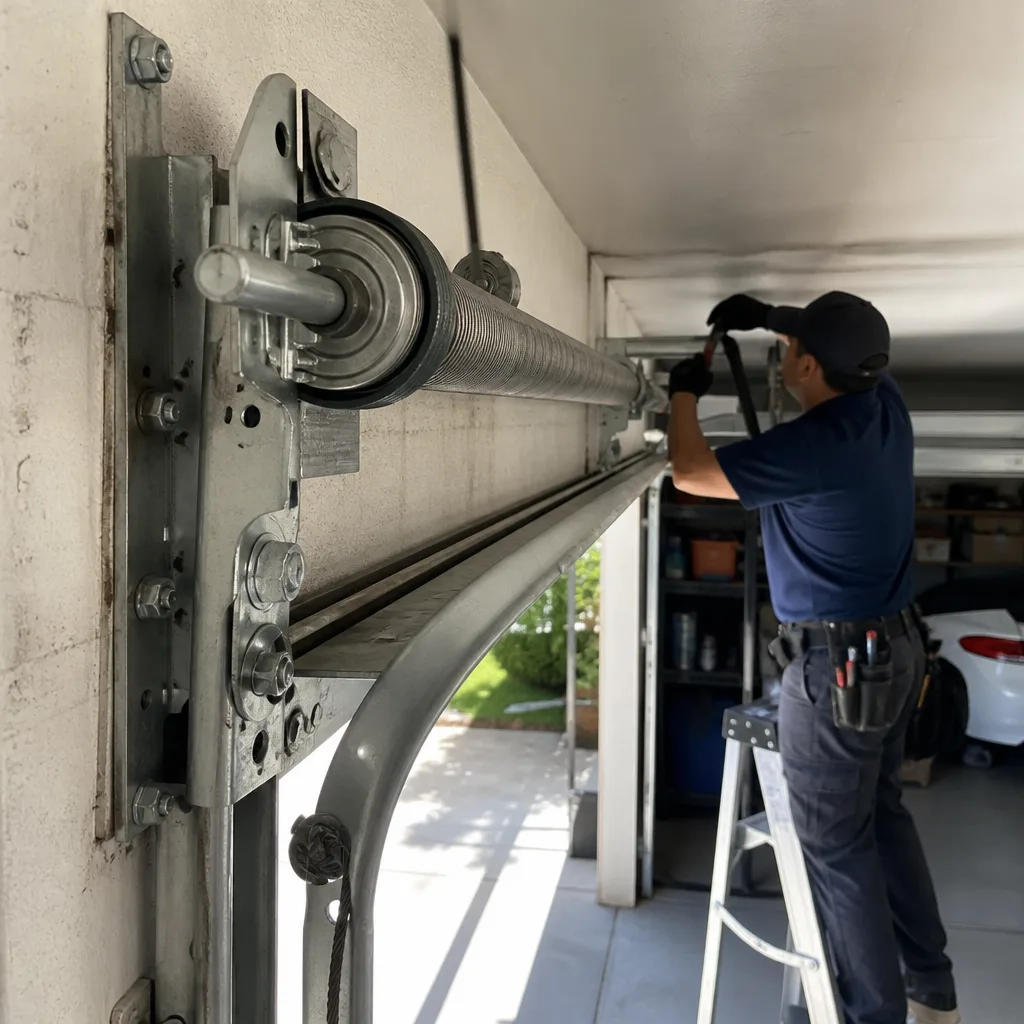 After
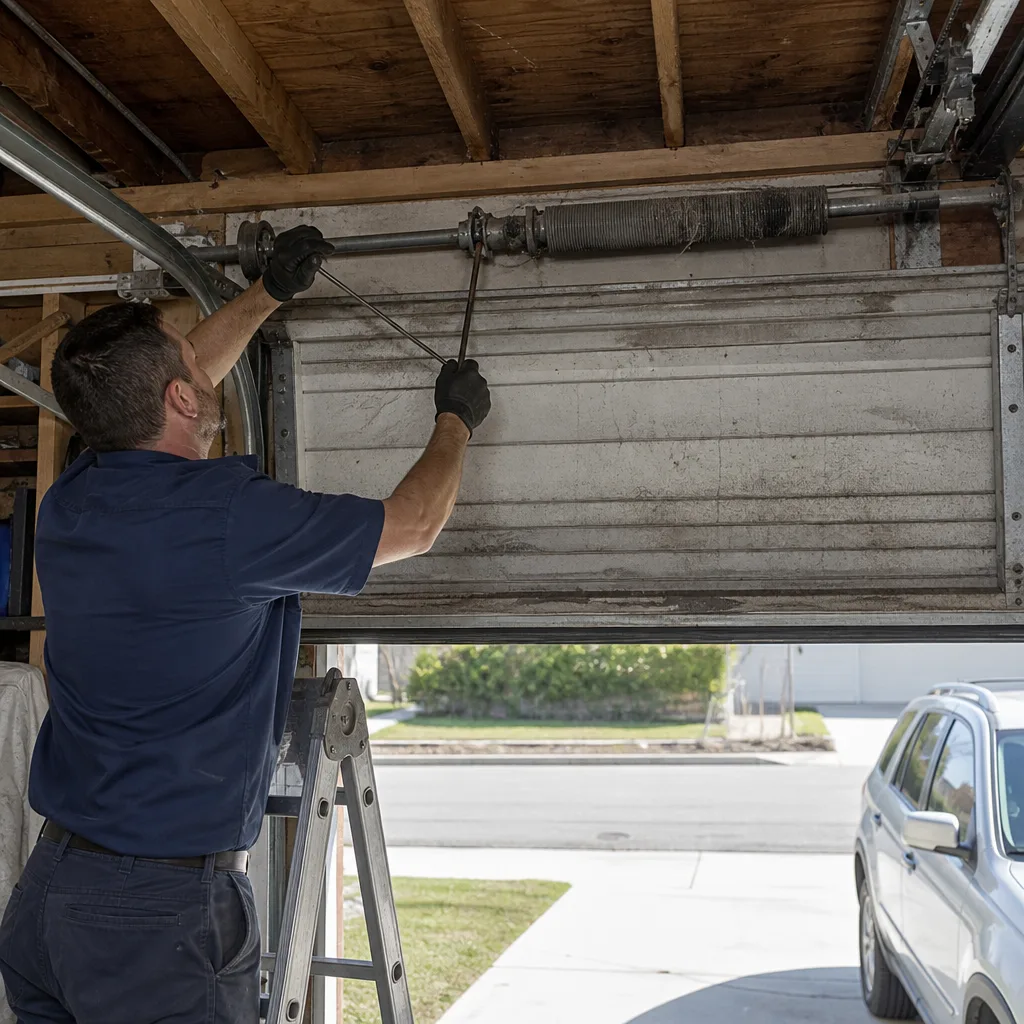 Before
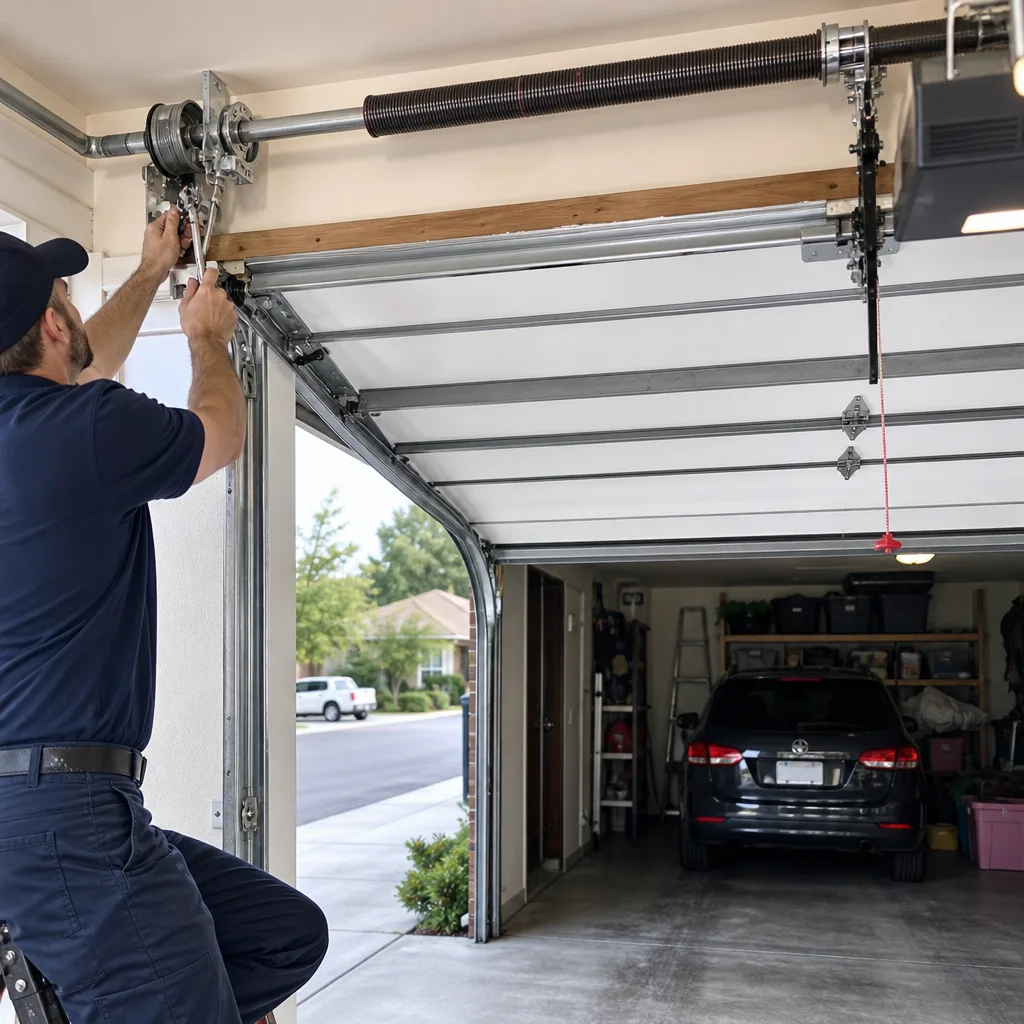 After